Cute Tomato and Leaves
First Impression: Friendly, Fresh, and Built for Branding
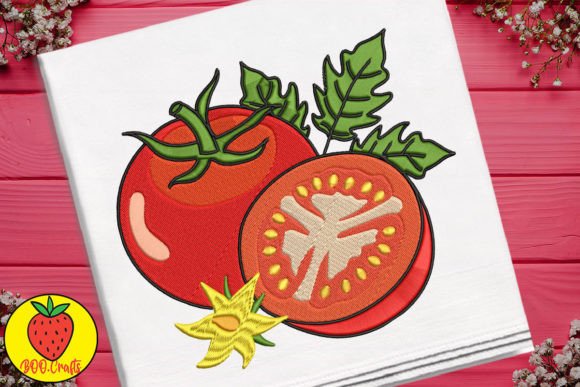
As an embroidery designer who’s digitized over 2,000 commercial designs for small businesses—from neighborhood cafés to handmade botanical brands—I opened Cute Tomato and Leaves expecting charm. What I found was a design that reads immediately as approachable, artisanal, and food-positive—ideal for Food category businesses that want warmth without whimsy overload. It doesn’t shout “cartoon”; it whispers “farm-fresh,” with balanced leaf curvature, soft tomato contours, and intentional negative space. That matters. When you’re building brand identity through custom apparel or embroidered patches, first impressions translate directly into customer trust—and Cute Tomato and Leaves delivers professionalism wrapped in playfulness.
Real-World Performance Across Small Business Merch
This machine embroidery design shines where many food-themed motifs fail: versatility. On staff aprons? It reads cleanly at 3.5" wide—no bleeding, no lost detail—even on textured canvas. As a chest logo on organic cotton tees? Its moderate stitch density holds up after repeated washes, especially when paired with quality stabilizer. For cap embroidery, I recommend positioning it slightly above center front on structured cotton twill: the leaves provide natural flow around the curve, and the tomato’s rounded shape avoids distortion. As a tote bag design, it anchors beautifully near the handle seam—small enough to feel intentional, bold enough to be legible from three feet away.
For boutique merchandise like reusable produce bags or ceramic jar labels, Cute Tomato and Leaves works as a subtle embroidered patch (2.25" max) when stitched onto linen-blend fabric. Etsy sellers report strong engagement when using it as a sleeve detail on hand-dyed work shirts—it adds handmade product credibility without overwhelming the garment. And for creative studios or florists branching into edible gardens or seasonal preserves, this digital embroidery file bridges categories: it feels botanical *and* culinary, making cross-promotion seamless.
Where to Use It Thoughtfully
While highly adaptable, Cute Tomato and Leaves requires smart placement decisions. Avoid scaling it below 1.75" for embroidered patches—leaf veins and stem definition begin to collapse, reducing visual clarity and weakening brand recognition. Cap fronts on low-profile mesh or curved visors demand careful digitizing adjustments; test the file on your actual cap blank before bulk production. On dark uniforms (navy, charcoal), verify thread color contrast: light green leaves against black fabric need slightly higher saturation than what’s suggested in standard palettes.
High stitch density isn’t excessive here—but it *is* present in the tomato’s subtle gradient fill. That means extra attention to fabric texture: skip terry cloth towels unless using tear-away + cut-away stabilizer combo, and avoid ultra-thin polyesters where puckering risk increases. Also, never assume compatibility with stretch fabrics—test on real garment samples first. If your small business merch includes performance wear or knit blends, request a simplified version from the digitizer or adjust underlay manually.
How It Strengthens Brand Identity and Customer Connection
Cute Tomato and Leaves does more than decorate—it communicates values. Its clean lines suggest care; its organic shape signals authenticity; its consistent scale across formats builds visual consistency. When customers see it on a café apron, then on a reusable tote, then on a product label, they subconsciously register cohesion—key for small business merch that competes with corporate branding.
That cohesion drives buyer engagement. Handmade product buyers respond to details that feel human-made—not overly polished, not too rigid. This design walks that line: the leaves have gentle asymmetry, the tomato has soft contour variation—traits that read as intentional, not automated. For crafters and digital embroidery file buyers, that translates to perceived value: clients are willing to pay more for branded items that feel curated, not generic. And because it fits naturally within Food and Embroidery contexts, it reinforces niche authority—whether you're a seed company, urban farm CSA, or vegan sauce brand.
Practical Embroidery Designer Notes
Before committing to production, run these checks:
- Test in black and white first. Assess silhouette strength and spacing—especially between leaf tips and tomato outline. A strong monochrome read ensures legibility at distance and in low-light settings (like café kitchens).
- Confirm small patch viability. Resize to 2" and stitch a sample on your target fabric. Does the stem hold? Do leaves retain separation? If not, reduce fill density or simplify outlines.
- Review thread color contrast across all intended substrates—light fabric vs. dark, smooth vs. nubby. Don’t rely solely on on-screen swatches.
- Inspect spacing and underlay. Tight corners (like where stem meets fruit) need proper underlay to prevent gapping. Check if the file includes auto-trim commands for multi-color runs.
- Verify hoop size compatibility. Most versions of Cute Tomato and Leaves fit standard 4x4 hoops—but confirm before nesting multiple units on large orders.
- Always test on real fabric. Mockups lie. Stitch on your exact apron material, cap blank, or tote canvas—not just muslin.
- Use appropriate stabilizer. Medium-weight cut-away for stable wovens; fusible + tear-away for knits; heavy cut-away + topping for terrycloth.
- Create a printable mockup for client approval—show it scaled correctly on each item type (cap, tote, shirt). Visual alignment prevents costly rework.
- Compare beside existing design assets. Does it harmonize with your logo font weight, icon style, and color palette? Consistency strengthens brand identity.
- Confirm commercial licensing. Since this is intended for small business merch and commercial embroidery, ensure your purchase grants rights for resale, staff use, and promotional distribution.
In short: Cute Tomato and Leaves isn’t just another food-themed embroidery file—it’s a strategic asset. When applied with intention, it elevates apron embroidery, refines cap embroidery, adds quiet confidence to tote bag design, and deepens connection across every touchpoint of your small business merch. Done right, it doesn’t just say “tomato.” It says “we care about craft, clarity, and consistency.” And that’s what turns customers into regulars.