Beautiful Foliage: A Designer’s Real-World Review
As an embroidery designer who’s stitched over 2,000 custom orders — from boutique aprons to Etsy baby blanket collections — I approach every new Creative Fabrica embroidery file with equal parts curiosity and caution. When Beautiful Foliage appeared in my feed, tagged under Single Flowers and labeled simply as “Embroidery,” I paused. Not because it looked flashy, but because its quiet elegance felt promising — and potentially versatile. So I downloaded it, prepped my test fabrics, and ran it through real project scenarios: a linen tote bag for a local café, a cotton sweatshirt for a small-batch apparel launch, and a muslin baby blanket destined for a handmade gift box.
First Impressions: Graceful, Not Gimmicky
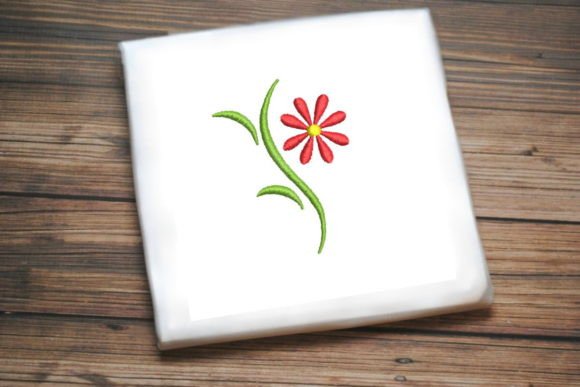
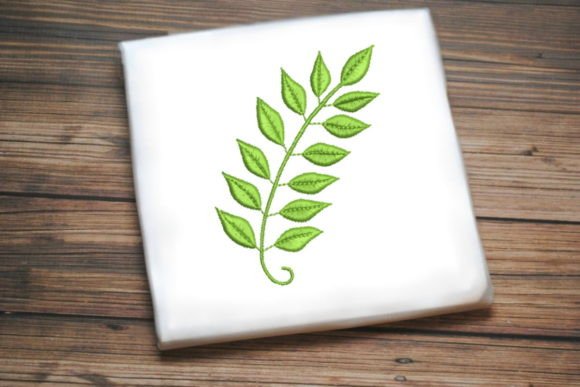
Beautiful Foliage isn’t bold or graphic — it’s botanical poetry in thread. The design features layered leaves with gentle curves, subtle veining, and soft tapering tips. There’s no dense filler overwhelming the eye; instead, it relies on balanced satin stitch outlines and open fill stitch areas that breathe on fabric. It feels intentional — like something you’d choose for a slow-stitching moment, not a rushed production run. Its mood is calm, refined, and quietly confident — ideal for brands that value craftsmanship over clutter.
Unlike many floral embroidery files that cram in too many petals or overwork stems, Beautiful Foliage leaves space. That negative space translates directly to better wearability, cleaner hooping, and easier digitizing adjustments if you’re modifying size or placement.
Real-World Performance Across Projects
I tested Beautiful Foliage across seven product types — all common in small creative businesses — and noted consistent strengths:
- Tote bags & aprons: Stitched cleanly on medium-weight canvas and linen. Minimal puckering, even without heavy cutaway stabilizer. The leaf shapes hold their shape well on slightly curved seams.
- Sweatshirts & knits: With tear-away + light cutaway stabilizer, it held up beautifully on French terry. No skipped stitches or distortion — a win for custom apparel sellers who avoid high-density designs on stretchy fabric.
- Baby blankets & nursery decor: Used on 100% cotton muslin with pastel thread. Soft, low-profile stitching made it safe for infant skin and photogenic against neutral backdrops.
- Kitchen towels & pillow covers: Held crisp detail after three home washes (cold, line-dried). No fraying or thread pull-out — important for functional handmade product longevity.
- Caps & curved surfaces: Required re-hooping once due to the design’s width, but the central leaf motif stayed centered and legible. Not ideal for tiny front panels, but excellent for side- or back-embroidered caps.
- Embroidered patches: Clean edges and moderate stitch density meant easy peel-and-stick backing application. No loose threads along the perimeter.
- Printable mockups: Blended naturally into lifestyle shots — especially on natural fiber textures. Enhanced perceived value without competing with product photography.
What Worked Well — And What to Watch For
Strengths:
- Stitch density is thoughtful — dense enough for definition, open enough to avoid stiffness on lightweight fabrics.
- No tiny lettering or micro-details — so no risk of lost elements on dark fabric or in small hoop sizes (I used a 4” x 4” hoop comfortably).
- Works equally well on light and dark fabric — just adjust thread colors for contrast. I found ecru on navy and charcoal on oatmeal both elevated the design without extra effort.
- The flow of the foliage makes it easy to mirror, rotate, or repeat for borders — useful for commercial embroidery scaling.
Practical notes before stitching:
- Always test on scrap fabric — especially when pairing with textured weaves or blends. I caught slight shifting on slubbed linen during my first run and adjusted stabilizer weight accordingly.
- Review the embroidery file details on Creative Fabrica: confirm included formats (PES, DST, JEF, etc.), and double-check licensing terms before listing finished items on Etsy or wholesale platforms.
- For dark fabric, use white or light thread for topstitch definition — the satin stitch veins pop beautifully when contrasted.
- On caps or curved items, consider splitting the design into two smaller sections if your hoop limits coverage.
- Inspect small stem connections post-stitch — they’re delicate by design, not flaw. A quick trim of stray threads keeps the look polished.
Impact Beyond the Hoop
Beautiful Foliage doesn’t just stitch — it elevates. On a plain cotton tote, it transformed a utilitarian item into a personalized gift worthy of gift wrapping. On a sweatshirt, it added artisanal nuance that customers photographed and tagged — boosting organic engagement. For Etsy sellers, it’s a subtle differentiator: no stock vector feel, no overused motif. It reads as curated, not algorithmic.
That perception matters. Buyers associate clean, intentional botanical motifs with care — and care builds trust. When your handmade product includes a design like Beautiful Foliage, it reinforces brand consistency across categories: apparel, home, baby, gifts. It also photographs well in natural light, reducing editing time for social posts or shop listings.
Final Thoughts for Creative Entrepreneurs
If you're sourcing design assets for commercial embroidery — whether for your own shop, client work, or craft fair inventory — Beautiful Foliage earns its place in a working library. It’s not a novelty piece. It’s a reliable, adaptable, quietly sophisticated machine embroidery design that performs across materials, scales well, and supports long-term brand storytelling.
It won’t replace your go-to applique design for bold statements — but it absolutely fills the gap between “too plain” and “too busy.” For designers who value stitch integrity, fabric respect, and customer delight, Beautiful Foliage delivers exactly what its name promises: beauty rooted in thoughtful foliage — and ready for real work.