Delicate Red Flower: A Designer’s Real-World Review
First Impressions: Grace, Not Gimmick
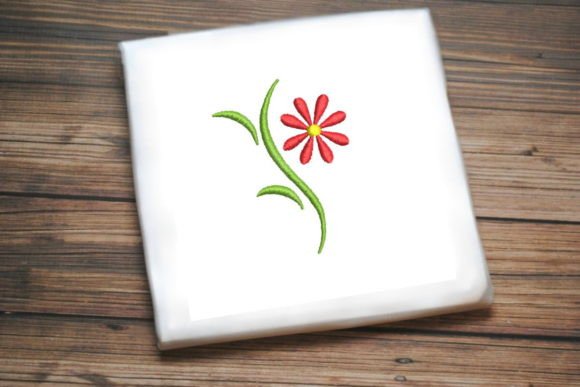
When I opened Delicate Red Flower for the first time, what struck me wasn’t just its color—but its restraint. This isn’t a bold botanical statement or an oversized floral motif. It’s a quiet, intentional shape: slender stem, gently unfurling petals, subtle curvature in the calyx. The design breathes. It feels hand-drawn, not algorithmically generated—like something sketched in ink before being translated into satin and fill stitch. That matters. In a sea of over-engineered embroidery files, Delicate Red Flower lands with elegance, not noise. It’s the kind of single-flower design that whispers “thoughtful” rather than shouts “decorative.”
A Tote Bag Test: Where It Truly Shines
Last week, I stitched Delicate Red Flower onto a natural linen tote for a local boutique’s spring collection. No appliqué, no background fill—just the design alone, centered on the front panel. The result? Instant sophistication. Customers paused mid-aisle. One asked, “Is that hand-embroidered?” (It wasn’t—but it looked like it could be.) That’s the power of thoughtful line weight and balanced negative space. On medium-weight woven fabric like linen or cotton canvas, the satin stitch petals held crisp edges, and the stem’s running stitch flowed without stiffness. It didn’t compete with the texture of the fabric; it complemented it.
Where It Fits—And Where It Doesn’t
Delicate Red Flower excels in projects where subtlety elevates perceived value: baby onesies (stitched on soft pima cotton), kitchen tea towels (centered above the hem), pillow covers (as a single focal point), and minimalist sweatshirt cuffs. It’s ideal for Etsy sellers offering personalized gifts—think monogram + flower combos on organic cotton napkins or nursery wall hangings. As a machine embroidery design, it scales well from 3" to 4.5" without losing definition.
But let’s be practical: avoid it on highly textured fabrics like bouclé or thick terry cloth—the fine petal details will blur. Skip it on ultra-stretchy knits unless you’re using cutaway stabilizer *and* testing tension rigorously. And while it’s lovely on dark fabric, check thread color contrast carefully: a deep burgundy thread on navy can read as flat without a subtle highlight stitch (which this design doesn’t include—so consider adding one manually if needed).
Small Hoop Realities
I ran Delicate Red Flower in a 4"x4" hoop on a lightweight chambray shirt—and it fit cleanly. No awkward trimming or re-hooping. But I wouldn’t push it into a 3"x3" hoop without verifying stitch density first. Some versions of single-flower designs pack too many fill stitches into tight areas, causing puckering. This one felt balanced, but always test on scrap first. Especially if you’re stitching on curved surfaces like caps: the stem’s gentle arc may need slight digitizing adjustment for clean wrap-around flow.
Commercial Use: Trust, Not Just Aesthetics
As a craft business owner, I don’t just ask “Does it stitch well?” I ask, “Does it make my customers trust my taste?” Delicate Red Flower does. It reads as curated—not generic. When used on boutique-branded aprons or holiday gift sets (say, embroidered linen sachets + matching drawstring bags), it signals care. That perception translates directly to willingness to pay premium pricing. For digital embroidery file sellers, this is a strong anchor piece in a “Single Flowers” bundle—versatile enough for beginners, refined enough for seasoned designers building cohesive design assets.
Design Notes You’ll Actually Use
- Test before committing: Run it on scrap fabric matching your final project’s weight and stretch—even if it’s “just cotton.” Thread tension shifts fast.
- Stabilizer isn’t optional: Use tear-away for stable wovens; cutaway for knits or lightweight silks. Skip the “no-stabilizer” myth—this design’s delicate lines need support.
- Check small details: Zoom in on the petal tips and stem base in your embroidery software. Are they smooth? Any stray nodes? Clean vectors matter for clean stitching.
- Mock it both ways: Drop Delicate Red Flower into black-and-white printable mockups. Does it hold presence without color? If yes, you’ve got flexibility for seasonal palettes.
- Licensing clarity is non-negotiable: Since the product description mentions use for “outfits” and “home decor,” confirm whether commercial embroidery rights are included—especially if you’re selling finished products or digital embroidery files.
Not Just Pretty—Purposefully Designed
What separates Delicate Red Flower from forgettable filler designs is its intentionality. It doesn’t try to be everything. It’s not a bouquet, not a wreath, not a border—it’s one flower, rendered with quiet confidence. That makes it incredibly adaptable: a wedding guest book cover accent, a subtle logo alternative for a herbalist’s apron, a tender detail on a baby blanket corner. It works because it respects the fabric, the stitch, and the person wearing or gifting the finished product.
For Etsy sellers, it’s a low-risk, high-return addition—small file size, quick stitch time, strong visual payoff. For apparel decorators, it’s a refined option when clients say, “Something simple, but meaningful.” And for hobbyists? It’s the kind of embroidery project that reminds you why you started: because beauty lives in careful execution, not complexity.
If you’re evaluating Delicate Red Flower for your next embroidered patch, custom apparel line, or handmade product launch—trust your eye, but verify your setup. Stitch it thoughtfully, pair it intentionally, and let its quiet elegance do the rest.