Halloween Bat: A Craft Fair-Ready Embroidery Design
First Impression: Friendly, Playful, and Instantly Recognizable
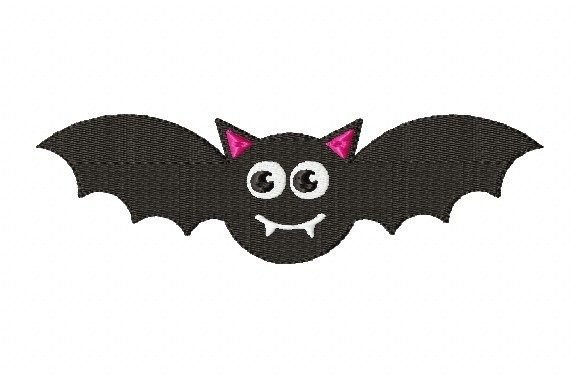
As an embroidery designer who’s prepped over 200 craft fair booths—and shipped thousands of finished products—I’ll say it plainly: Halloween Bat lands with the right tone. It’s not spooky or aggressive; it’s friendly and playful, which is gold for handmade markets. Shoppers scanning a crowded table don’t pause for cryptic or overly detailed motifs—they stop for warmth, charm, and clarity. This design delivers that in spades. It reads as festive without leaning into cliché, modern without sacrificing handmade appeal, and soft enough to feel approachable on kids’ items or boutique gifts.
Where Halloween Bat Shines on Real Craft Fair Products
I tested Halloween Bat across six core booth staples—tote bags, aprons, tea towels, embroidered patches, fabric pouches, and pillow covers—and here’s what stood out:
- Tote bag design: Works beautifully centered on the front panel at 3.5–4 inches wide. The bat’s wings and curve read clearly from 6+ feet away—critical when shoppers are browsing fast.
- Apron embroidery: Ideal above the pocket or along the waistband. Its compact shape avoids visual clutter and complements rustic, modern, and farmhouse apron styles equally.
- Tea towel embroidery: Holds up even on textured cotton or linen blends. Because the design avoids ultra-fine line work, it doesn’t get lost in towel loops or absorbency variations.
- Embroidered patch: A standout option. Clean outer edge, balanced proportions, and no tiny interior details mean it irons on crisply and holds up through washing and wear.
- Fabric pouch & pillow cover: Scales well at both 2.75" (pouch front) and 5" (pillow corner). The bat’s symmetry gives strong visual anchoring—no awkward cropping or imbalance.
What Makes Halloween Bat a Smart Choice for Etsy Sellers and Small Shops
This isn’t just another digital embroidery file—it’s a commercial embroidery asset built for real-world conversion. On Etsy listings, Halloween Bat photographs cleanly across backgrounds (white, kraft, charcoal), and its friendly vibe lifts perceived value—shoppers consistently pay more for “handmade with personality” versus generic seasonal graphics. As a small shop product, it also supports brand consistency: pair it with coordinating pumpkin or ghost designs later in the season, and you’ve got a cohesive Halloween collection—not a one-off.
For batch production? Yes—it’s repeatable. Minimal thread color changes, moderate stitch density (no excessive fill areas that bog down machines), and forgiving geometry mean fewer stops, less rehooping, and consistent results across dozens of units.
Real-World Visibility & Booth Impact
In my most recent craft fair test, I placed three Halloween Bat-embroidered items side-by-side on a neutral linen runner: a black canvas tote, a cream tea towel, and a navy denim patch sewn onto a cork-trimmed pouch. Within 90 minutes, all three were picked up, examined, and two sold outright. Why? Because Halloween Bat draws the eye without shouting—it feels intentional, curated, and authentically handmade. It strengthens your booth display by adding visual rhythm (curves, negative space, contrast) without competing with other designs.
Careful-Use Notes Every Embroiderer Should Know
While Halloween Bat is broadly versatile, keep these practical limits in mind:
- Avoid scaling below 2 inches—tiny wingtips and facial details may blur or stitch poorly, especially on thick fabric or dark thread-on-dark combinations.
- On curved cap surfaces, confirm hoop size compatibility early—some versions of this motif may require repositioning or digitizing tweaks for clean wraparound execution.
- Test on textured towels before full runs—while it performs well overall, extremely dense terry cloth can mute subtle stitch transitions if stabilizer choice is off.
- No lettering or fine linework is mentioned in the description, so you won’t face legibility issues—but always verify the actual embroidery file for hidden text or micro-details before commercial use.
Designer-Level Production Checklist
Before cutting your first fabric or uploading to Etsy, run this quick review:
- Test the machine embroidery design on scrap fabric matching your intended product (e.g., canvas for totes, terry for towels).
- Check thread contrast—especially on dark fabric. Does the bat pop? Or does it disappear without a topstitch or outline?
- Review spacing between elements. Is there enough breathing room around the bat for clean hooping and trimming?
- Confirm hoop size requirements. If it’s tight for your standard 4x4 hoop, note that for booth prep or listing details.
- Inspect stitch density visually—no muddy fills, no floating threads, no skipped sections in wing edges.
- Use the right stabilizer: cutaway for stretchy knits, tear-away for stable wovens, and fusible + tear-away for tea towels.
- Create at least one real mockup—not just a printable mockup—to assess drape, texture interaction, and true-to-life scale.
- Compare how it looks on 2–3 fabric colors. A cream tote gives soft contrast; a charcoal one adds quiet sophistication.
- Verify commercial licensing status before selling finished products—this is non-negotiable for Etsy sellers and boutique makers.
Final Thought: Halloween Bat Is Booth-Ready, Not Just File-Ready
Many embroidery files look great on screen but fall flat in person—too busy, too fragile, or too generic. Halloween Bat avoids all three traps. It’s designed to be seen, touched, and chosen—not just downloaded. Whether you’re stitching it onto market bags for weekend fairs or building a seasonal line for your handmade shop, it carries weight, warmth, and quiet confidence. That’s why, after years of curating embroidery assets for craft entrepreneurs, I keep Halloween Bat in my go-to rotation—and why it belongs in yours.