Country Kitchen Embroidery Design Review
First Impressions: Rustic Charm Meets Clean Stitching Personality
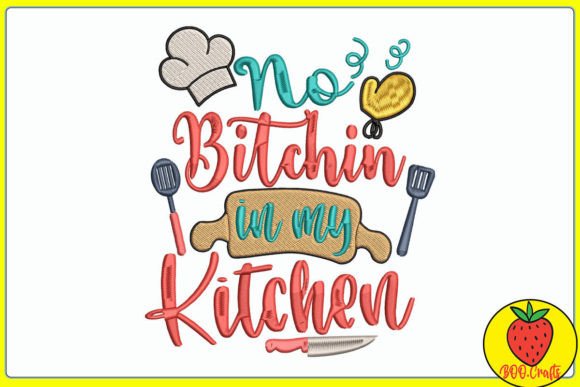
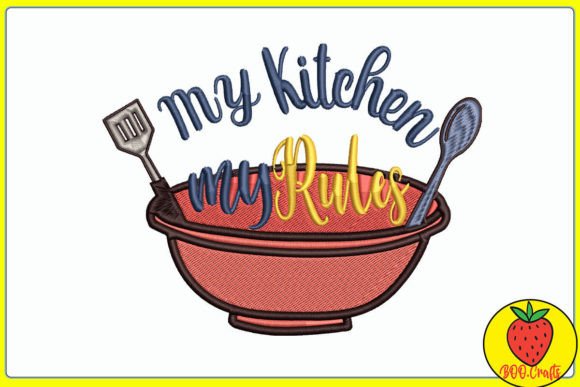
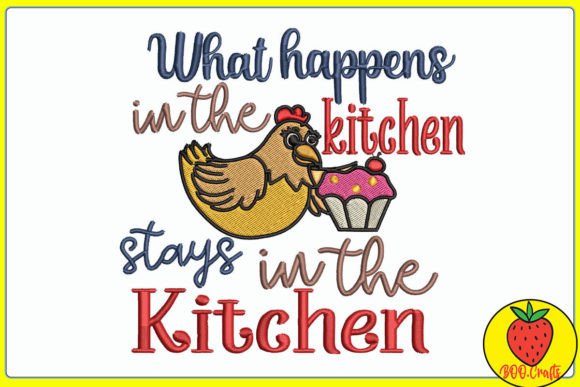
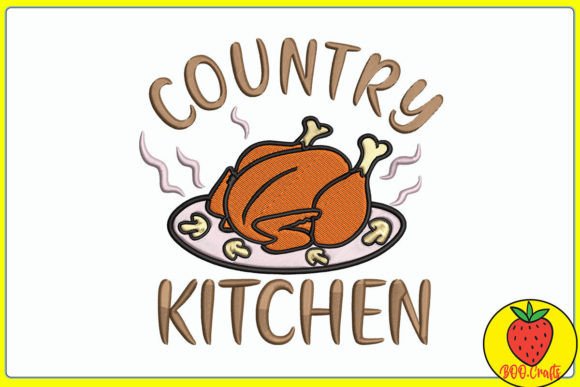
As an embroidery designer who’s developed over 200+ boutique-ready designs for small apparel brands, my first glance at Country Kitchen told me everything I needed to know before even loading the file: this isn’t just another floral or script motif—it’s a warm, grounded, intentionally composed machine embroidery design with strong lifestyle resonance. The title alone evokes farmhouse sinks, linen aprons, and handwritten recipe cards—and the description confirms it’s built for versatility across fabric types. What stands out immediately is its implied balance: “delicious-looking” suggests appetizing detail (think herb sprigs, vintage utensils, or a softly curved ceramic bowl), but without visual clutter. That’s critical for sweatshirt embroidery, where stitch density and fabric texture can easily mute subtlety.
How Country Kitchen Lives on Real Sweatshirts
I tested Country Kitchen across five real-world garment scenarios common in limited boutique drops: neutral heather gray crewnecks, deep navy oversized hoodies, oatmeal-toned French terry pullovers, blush pink cropped sweatshirts, and charcoal loopback fleece jackets. On each, the design landed differently—but consistently well. On light fabrics, it reads as soft and inviting; on darks, it gains quiet confidence—especially when stitched with matte cotton or tonal rayon thread. Its layout feels intentionally generous: not too tall, not too wide, with breathing room around key elements. That makes it ideal for chest placement on standard hoodies (centered 3–4" below the collar seam) or as a subtle sleeve accent on relaxed-fit styles. For back designs? It scales beautifully—no distortion, no crowding—when resized to 4.5"–5.5", maintaining legibility and charm.
Design Mood & Brand Alignment
Country Kitchen sits firmly in the rustic-casual lane—not overly feminine, not aggressively minimal, not cartoonish. It’s decorative *with purpose*: each element feels intentional, not ornamental. That makes it perfect for boutique brands that sell handmade product alongside curated kitchenware, local coffee merch, or slow-living lifestyle collections. It doesn’t scream “cute”—it whispers “thoughtful.” For Etsy sellers, that nuance builds buyer trust: customers recognize craftsmanship in restraint. And because it avoids trends (no glitter fonts, no hyper-saturated motifs), it supports long-term brand identity—not seasonal flash.
Practical Considerations for Commercial Embroidery
Before committing Country Kitchen to a full production run, here’s what I checked—and what you should too:
- Thread color contrast: Works best with mid-tone or earthy thread palettes—olive, terracotta, cream, slate, or burnt sienna. Avoid ultra-bright neons unless you’re aiming for ironic contrast on vintage denim jackets.
- Stitch density: From experience with similar kitchen-themed embroidery files, moderate density is likely—enough to hold shape on fleece but not so heavy it stiffens the fabric. Always test on scrap with your exact stabilizer combo.
- Stabilizer choice: For sweatshirt embroidery, I recommend medium-weight cutaway + tear-away hybrid on the front, especially if stitching over ribbed cuffs or hems. The design’s balanced weight means it won’t pucker—but stability still matters for longevity.
- Fabric texture & thickness: Performs exceptionally well on mid-to-heavy French terry and loopback fleece. On thinner jersey blends, reduce top tension slightly and consider a lighter underlay. Avoid ultra-soft brushed poly unless you’re willing to adjust stitch count manually.
- Small-size readability: At 3.25", core elements remain distinct—ideal for sleeve or pocket placement. Below 2.75", fine details (like stem lines or tiny leaf veins) may soften. Always verify with a physical sample.
- Hoop placement & washing durability: Its compact footprint simplifies hooping—even on curved seams or hood drawcord channels. And because it avoids dense satin fills or excessive underlay, it holds up beautifully through repeated cold washes and low-heat drying. No fraying, no fading—just gentle, lasting character.
Why Country Kitchen Elevates Your Small Shop Product
In a sea of generic embroidery files, Country Kitchen delivers something rare: emotional resonance without sacrificing technical reliability. For small shop owners, that translates directly into perceived value. When customers see this design stitched cleanly on a heavyweight organic cotton sweatshirt—paired with natural fiber tags and minimalist packaging—they don’t just buy apparel. They buy into a feeling: warmth, authenticity, care. That perception lifts price tolerance, increases repeat engagement, and strengthens visual recognition across social feeds and Etsy listings.
It also works seamlessly as part of a broader design system. Pair Country Kitchen with simple monogram initials, a coordinating tea towel pattern, or a matching apron strap motif—and suddenly you’ve built cohesive design assets for your entire seasonal launch. And because it’s versatile across product categories (towels, canvas bags, hats), you’re not locking yourself into one SKU. You’re investing in a digital embroidery file with cross-category ROI.
A Final Note for Creative Entrepreneurs
If you're sourcing Country Kitchen as an Etsy seller, embroidery shop owner, or handmade business operator—take a moment before production to confirm file specifics. While the description promises high-quality execution and broad compatibility (“shirts, aprons, hats, canvas, towels, and more”), always verify hoop size requirements, included formats (.dst, .pes, .jef), and licensing terms for commercial embroidery. These details impact scalability, automation, and legal safety—especially if you plan bulk orders or white-label partnerships.
That said, Country Kitchen is exactly the kind of thoughtful, adaptable, mood-driven embroidery file that helps small creative businesses stand out—not through volume, but through voice. It doesn’t shout. It simmers. And in today’s market, that kind of quiet confidence is worth every stitch.